

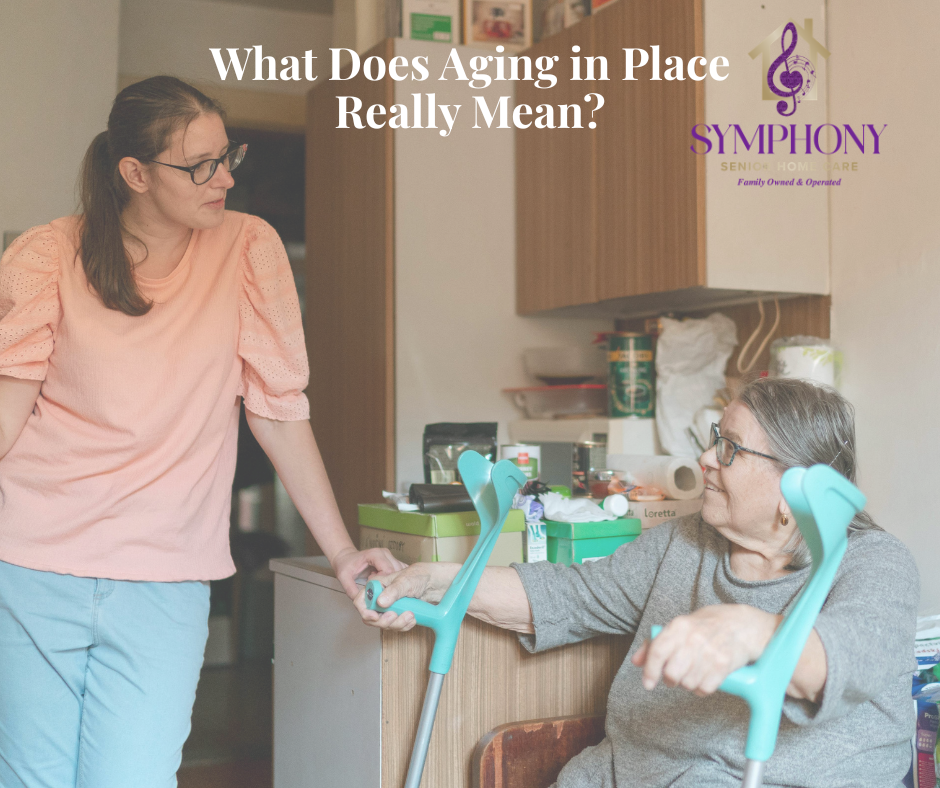
For many families, there comes a moment when the question changes. It is no longer just “Is Mom okay?” but “How do we help Mom stay okay here, in the home she has always known?” That question is at the heart of a concept you may have heard called aging in place, and it is becoming one of the most important conversations families in the Twin Cities are having about the people they love.
What Does Aging in Place Mean?
Aging in place means a senior continues to live safely, comfortably, and independently in their own home as their needs change over time, rather than moving to an assisted living community or nursing facility. It does not mean doing everything alone. It means having the right support in place so that home remains a realistic, safe option for as long as possible. For one person, that may mean a few hours of companionship each week. For another, it could mean daily personal care or overnight support. Aging in place looks different for every family.
Why Do So Many Families Want This for Their Loved Ones?
Home carries meaning that is hard to replace. It is the neighborhood a senior knows, the garden they have tended for decades, the neighbors who check in, the routines that bring comfort. Most older adults say they would rather remain in the home they know than move into a care facility, provided they can do so safely. For many families, the challenge isn’t deciding what their loved one wants; it’s figuring out how to make that possible. It’s why aging in place in the Twin Cities has become such a central conversation for families like yours.
What Makes Aging in Place Possible?
Aging in place usually becomes possible because someone is there to help with the things that have gradually become harder. That typically means help with daily activities, medication management, and companionship, delivered by caregivers a family can trust and a senior can build a relationship with over time. Consistency matters here. Frequent changes in caregivers can be hard on seniors, especially those managing memory concerns. You can read more about how in-home care is structured to support daily life at home.
What Kind of Support Does In-Home Care Provide Day to Day?
In-home care is not only about medical needs. It covers the small, meaningful parts of daily life: personal care, help around the house, transportation to appointments, and companionship that reduces isolation. We wrote more about this recently in what in-home care helps with day to day, which walks through what a typical care plan can include.
How Is Symphony Different From Other In-Home Care Options?
Symphony Senior Home Care is locally owned and family operated, not a franchise. That means no corporate layers between a family and the people making decisions about care. Angie remains personally involved with the families Symphony serves, so when questions come up, families know who they’re talking to instead of being passed between departments. Symphony also participates in Minnesota’s Elderly Waiver program for income-eligible seniors, and is BBB accredited and a current BBB Torch Award finalist. You can learn more about Symphony and how that local, hands-on approach shapes the care families receive.
How Do You Know When It’s Time to Start the Conversation?
Aging in place is not an all-or-nothing decision. It often starts with noticing small changes, a missed medication, a little more difficulty getting around, a home that is not being kept up the way it used to be. Recognizing those early signs is usually the first step. It’s a topic we’ll explore in more depth in an upcoming article. Sometimes the best first step is simply having a conversation before a crisis forces a decision.
If you are wondering whether aging in place in the Twin Cities is realistic for your family, we are happy to talk it through. Symphony offers a free, no-obligation in-home consultation for families across the seven Twin Cities counties. There is no pressure, just a conversation about what your loved one needs and what is possible.