

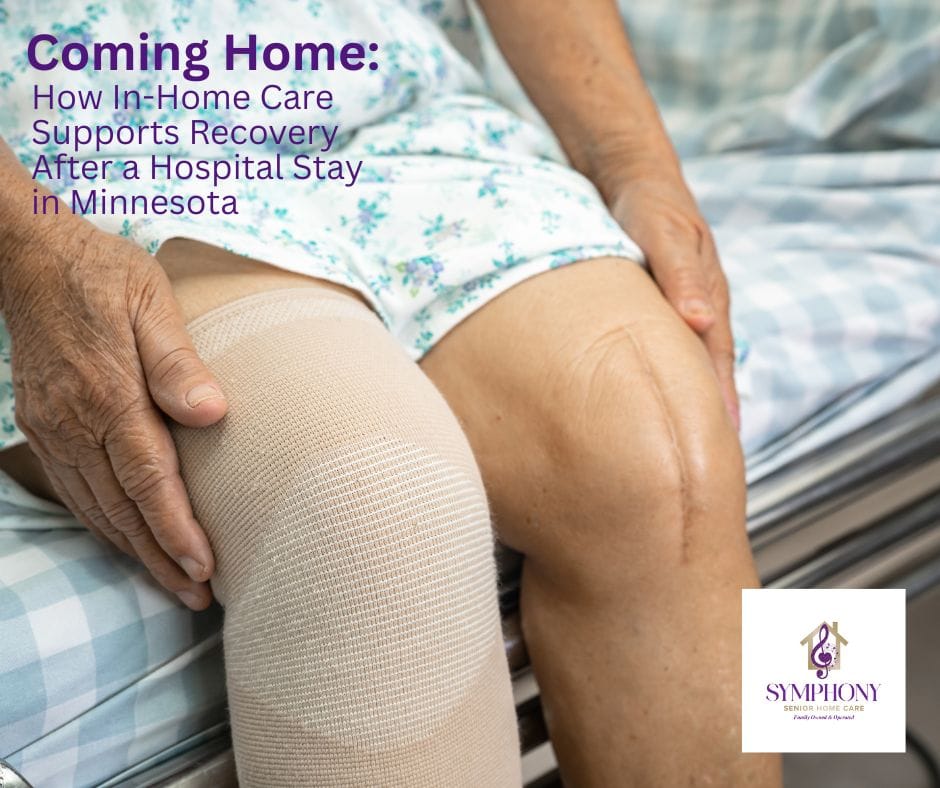
The hospital stay is over. The doctors have cleared your loved one to go home.
That moment can feel like a relief. But for many families in Minnesota, it also marks the beginning of one of the most uncertain stretches of caregiving they will face. Coming home after a surgery or hospitalization is not the end of the recovery. In many ways, it is the beginning of the hardest part.
The first days and weeks at home after a hospital stay are when the risk of complications is highest, when medication routines are most likely to get off track, and when a senior who seemed fine in the hospital begins to show how much they are actually struggling.
Post-hospital home care during this window is not just helpful. For many families across the Twin Cities, it is what makes a safe recovery possible.
Why the Transition Home Is So Critical
Hospitals are designed to stabilize. They are not designed for the slow, quiet work of recovery. Recovery happens at home, where everyday activities like getting dressed, preparing meals, climbing stairs, and remembering medications become part of the healing process.
Once a patient is medically cleared, the focus shifts to getting them home. But the support systems that surrounded them around the clock in the hospital do not follow them through the door.
It is common for older adults to experience fatigue, weakness, confusion, and reduced appetite for days or even weeks after a hospital stay. A senior who was walking independently before surgery may need extra support getting to the bathroom safely after returning home.
This is the window where in-home care makes the most meaningful difference. The Minnesota Department of Health outlines the rights families have when arranging home care services, including the requirement that every client receive a written service plan covering their specific needs.
What Does Post-Hospital and Post-Surgery Home Care Include?
In-home care after a hospital stay or surgery is built around the specific needs of the recovery period. A Symphony caregiver supporting a client during this time typically helps with:
• Personal care assistance, bathing, dressing, and grooming, while mobility and strength are still rebuilding
• Medication reminders according to the care plan, helping ensure the right medications are taken at the right times
• Meal preparation that supports recovery, including attention to any dietary guidelines from the hospital
• Light housekeeping to keep the home environment safe and manageable
• Mobility assistance and fall prevention, particularly important when strength and balance are compromised
• Transportation to follow-up appointments, therapy sessions, and other essential medical visits
• Companionship and an attentive presence, so your loved one is not left alone during one of the most vulnerable stages of recovery
The goal is to help your loved one recover safely and confidently while regaining as much independence as possible.
Why Seniors Are at Higher Risk After a Hospital Stay
It is worth understanding why the post-hospitalization period carries elevated risk, because it often surprises families who assumed the hard part was over.
Hospital stays, even short ones, can cause a noticeable decline in strength and function in older adults. Fatigue, confusion, weakness, and reduced appetite can persist for weeks after discharge. A senior who was walking independently before a surgery may need support getting to the bathroom safely for several weeks after coming home.
Medication errors are also significantly more common during this period. New prescriptions, adjusted doses, and complex schedules are difficult to manage, especially when a senior is still fatigued and not thinking as clearly as usual.
Overnight home care is often particularly valuable during this period for seniors who need additional support through the night, especially in the first weeks following a major procedure or health event.
Helping Reduce the Risk of Hospital Readmission
One of the important goals of in-home care following a hospitalization is helping reduce the risk of returning to the hospital.
Readmission within 30 days of discharge is a significant concern for older adults, and many can be reduced with good discharge planning, consistent support, and close follow-up. Missed medications, undetected complications, falls at home, and inadequate nutrition are among the most common contributors.
Having a consistent caregiver present during this window means someone is paying attention. Someone notices when your loved one seems more confused than yesterday, when they have not eaten enough, when they are favoring one side when they walk, when something seems off before it becomes a crisis. That kind of attentive, consistent presence is exactly what caregiver consistency makes possible.
What About Families Who Are Coordinating Care From a Distance?
Many families navigating post-hospital care for an aging parent are doing so from across town or across the country. They attended the discharge meeting. They read the instructions. But they cannot be there every day to make sure things are going smoothly.
For these families, in-home care provides something invaluable: a trusted, present person on the ground. A caregiver who is there, paying attention, and in communication with the family about how their loved one is doing.
If you are supporting a parent through a recovery from a distance, a free in-home consultation can help you understand exactly what support would look like and give you confidence that someone reliable is there.
How Soon Can In-Home Care Begin After a Hospital Discharge?
Symphony works to arrange care as quickly as families need it. We have supported families who reached out the day of a discharge and needed care to begin that same day or the following morning.
The earlier you reach out, the more time we have to make a thoughtful caregiver match. But we understand that hospital timelines are not always predictable, and we work with your family’s real situation, not an ideal one.
How Symphony Supports Post-Hospital Recovery in the Twin Cities
Symphony Senior Home Care is locally owned and independently operated in White Bear Lake. We proudly serve families throughout the seven-county Twin Cities metro area and have supported many families through the transition home after a surgery, a fall, a stroke, or an extended hospitalization.
If your loved one has recently been discharged or you are anticipating a procedure and want to plan ahead, we would be glad to talk through what support would look like.
Reach out to Symphony Senior Home Care to start the conversation.
Frequently Asked Questions About Post-Hospital Home Care
How long does someone typically need in-home care after a hospital stay?
That depends on the reason for the hospitalization, the type of procedure or illness involved, and how quickly your loved one regains strength and independence. Some families need support for two to four weeks. Others find that care needs extend longer than anticipated, particularly if a health event revealed underlying needs that were not previously addressed. Symphony builds flexible care plans that can grow or scale back as recovery progresses.
What types of surgeries commonly require home care?
Hip replacement, knee replacement, heart procedures, abdominal surgery, fractures, and other major procedures often leave seniors needing extra help at home while they regain strength and confidence. Even procedures that feel routine can be more demanding on an older adult’s body than anticipated, and having support in place during recovery makes a meaningful difference.
Can in-home care start the same day as hospital discharge?
In many cases, yes. Symphony works to respond as quickly as families need. Reaching out before discharge, even a day or two in advance, gives us the best chance to make a thoughtful caregiver match. But we understand that is not always possible, and we do our best to respond to urgent situations quickly.
Is post-hospital care covered by insurance or Medicare?
Coverage depends on the type of care and the specific plan. Non-medical in-home support, the kind of personal care, companionship, and daily living assistance Symphony provides, is typically not covered by Medicare but may be covered in part by long-term care insurance or other programs. Symphony accepts the Minnesota Elderly Waiver for eligible clients. We recommend speaking with your insurance provider and asking about your specific coverage during the discharge process.
What if my loved one also has dementia or another chronic condition?
Post-hospital recovery is more complex when a senior also lives with dementia or another chronic condition. Symphony has experience supporting clients who are navigating both a recent health event and an underlying condition. Dementia care at home requires additional attention to consistency and routine, which becomes even more important during a disorienting recovery period.